
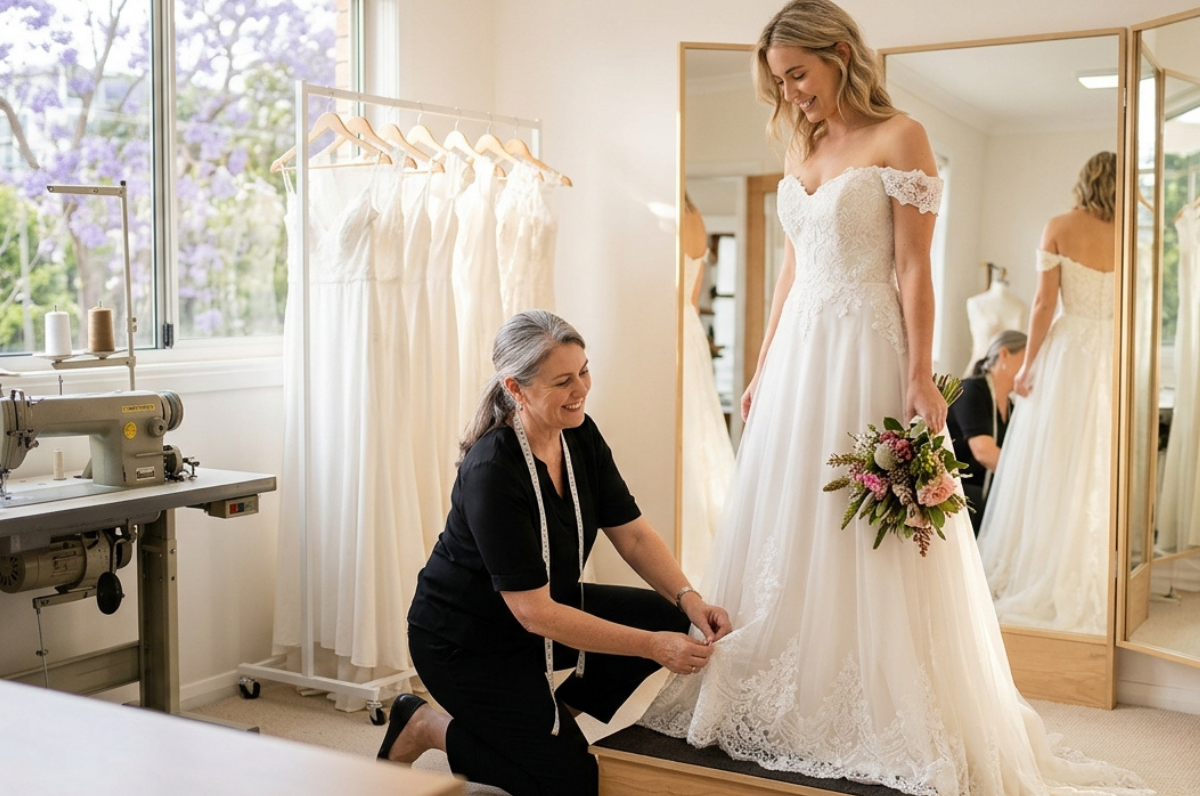
Spring is one of the most popular times of year to marry in Brisbane. The jacarandas are blooming, the evenings are warm, and outdoor venues are at their best. It’s also the busiest season for bridal seamstresses.
If your wedding falls between September and November, your gown alterations need a plan. This guide covers wedding dress alterations in Brisbane for spring brides. It explains when to book, what happens at each fitting, how the local weather affects fit and fabric, and how to avoid the mistakes that cause last-minute stress.
How Far in Advance Should Spring Brides Book Wedding Dress Alterations?
For most gowns, book your first fitting 8 to 12 weeks before the wedding. That gives you room for two or three fittings and a buffer for anything unexpected.
Spring is peak season in Brisbane, so more notice is better. Many brides book their initial consultation even earlier, as soon as the dress arrives. They then schedule the fittings themselves closer to the date.
Here’s a typical timeline for a November wedding:
- July to August: Gown arrives. Book a free consultation to assess the work needed.
- Early September: First fitting, with pinning and major adjustments mapped out.
- Early October: Second fitting to check the structural changes.
- Late October to early November: Final fitting, bustle demonstration and collection.
Allow extra time if:
- Your gown needs significant work such as resizing, bodice reconstruction or lace hem reapplication.
- You’re travelling to Brisbane for the wedding and can only attend a limited number of fittings.
- You’re altering a vintage or heirloom dress that may need repairs first.
Timing is important, but it isn’t everything. If your wedding is only weeks away, you still have options.
Getting Married in October or November? What Short-Notice Alterations Can Still Achieve
If you’re reading this in late September with an October or November date, don’t panic. A lot can still be done with a few weeks’ notice. You just need to act quickly and be realistic about priorities.
Usually achievable on shorter timelines:
- Hem adjustments on simpler fabrics
- Taking in side seams
- Adding a bustle
- Inserting bra cups
- Strap shortening or adding straps
- Minor repairs and loose beading
More challenging at short notice:
- Significant resizing, especially letting a dress out
- Hems with lace, horsehair or scalloped edges that need removing and reapplying
- Restructuring a bodice or changing the neckline
- Extensive beadwork across seams
Tips for short-notice brides:
- Call rather than email. Explain your date so the seamstress can tell you straight away what’s feasible.
- Bring everything to the first appointment: your shoes, undergarments and accessories. This avoids a wasted fitting.
- Prioritise. Focus on fit and comfort first, then finishing details.
- Stay flexible. Weekday or after-hours slots are often easier to secure than Saturdays in spring.
Once your fittings are locked in, the next thing to think about is how your gown will feel on a warm Brisbane day.
How Brisbane’s Spring Weather Affects Your Gown’s Fit and Comfort
Brisbane spring days are often warm and sunny. Humidity rises steadily through November and storms are common later in the season. That affects both how your dress feels and how it behaves.
Heat and humidity can:
- Cause slight swelling in hands, feet and arms, which makes tight sleeves and fitted bodices feel snugger than they did at your fitting.
- Make heavy fabrics, full linings and multiple petticoat layers uncomfortable over a long day.
- Soften structured fabrics and cause some materials to cling.
Alteration choices that help:
- A fit that’s secure but not tight. A skilled seamstress fits the bodice so it stays in place without restricting your breathing, especially if you’ll be dancing.
- Removing unnecessary layers. An extra lining or petticoat can often be taken out to lighten the gown.
- Bra cups instead of a separate bra. These reduce layers and improve comfort.
- A practical hem length. For outdoor ceremonies on grass, sand or gravel, a slightly shorter front hem stops the dress catching or dragging.
- A strong bustle. Getting the train off the ground after the ceremony keeps the fabric clean and makes moving easier on a hot dance floor.
If you’re marrying outdoors, mention it at your first appointment so the alterations can be planned around it.
The Most Common Bridal Alterations for Spring Wedding Dresses
Nearly every gown needs some adjustment. Even a dress in your size is cut for a standard body shape, not yours. These are the most common bridal alterations in Brisbane each spring.
Hemming
Gowns are usually made long enough to suit a range of heights and shoes. The hem is adjusted to your chosen shoe so you can walk comfortably without tripping.
Taking in or letting out seams
Side seams, waist and bust are adjusted to follow your natural shape. Taking in is generally simpler than letting out, which depends on the seam allowance available.
Bustles
A bustle lifts and secures the train for the reception. Common styles include the over bustle, the French (under) bustle and the ballroom bustle. The right one depends on your fabric, train length and gown style.
Bra cups and support
Cups sewn into the bodice give shape and support, especially in backless or low-back designs popular for spring.
Strap and sleeve adjustments
Straps can be shortened to stop them slipping. Sleeves can be added, removed or reshaped for comfort in warmer weather.
Customisations
Some brides add a slit, pockets, a detachable overskirt or a change of neckline to make the gown their own. These are more involved, so raise them at your first consultation.
What to Expect at Each Bridal Fitting in Brisbane
Most brides need two to three fittings. Complex gowns may need more. Here’s what usually happens at each stage.
Initial consultation
You’ll try on the dress and talk through what you’d like changed. The seamstress will assess the gown’s construction and explain what’s possible. You’ll also get a pricing estimate and plan your fitting dates.
First fitting
This is the main working appointment. Your dress is pinned to your shape and the hem is marked. The overall fit, the bustle style and any customisations are agreed.
Second fitting
You try the gown on after the main alterations. This is where fine-tuning happens: small tweaks to the bodice, checking the hem and confirming comfort.
Final fitting
The dress should now fit as intended. You’ll check that you can sit, walk, raise your arms and dance. You’ll also learn how to fasten the bustle, so bring the person who’ll be doing it on the day.
What to bring to every fitting:
- Your wedding shoes (or shoes of the exact same height)
- The undergarments you’ll wear on the day
- Any shapewear
- Your veil, belt or other accessories that affect the look
- A trusted friend or family member for support and a second opinion
What Affects the Cost of Wedding Dress Alterations in Brisbane
No two gowns are the same, so alteration pricing varies. The best way to know your cost is a consultation where the dress is assessed in person. These factors have the biggest impact:
- Fabric type. Lace, silk, chiffon and tulle require more careful handling than satin or crepe.
- Beading and embellishment. Detail that crosses a seam or hem often has to be removed and hand-reapplied.
- Number of layers. A hem on a gown with four layers takes much longer than on a gown with one.
- Complexity of the change. A simple strap adjustment costs far less than resizing or restructuring a bodice.
- Timeframe. Rush work may carry an additional charge because it requires reprioritising the workroom schedule.
Ask for these upfront:
- A written or itemised estimate
- Whether follow-up minor adjustments are included
- Whether a deposit is required
- Whether steaming or pressing is included before collection
Look for a specialist who offers a free initial consultation and transparent pricing with no hidden fees. Then you’ll know where you stand before any work begins.
Altering Online, Designer and Vintage Gowns: What’s Different
Where your gown came from shapes how it should be altered.
Online gowns
Dresses bought online are often more affordable. They may still need more work, because sizing charts vary and construction quality differs between sellers. Common fixes include resizing, re-securing loose embellishments and improving internal structure. Have an online gown assessed as soon as it arrives so there’s time to address any surprises.
Designer gowns
Designer gowns are carefully constructed. They often use internal corsetry, boning and fine lace appliqué. An experienced bridal seamstress understands how leading labels are built and alters them without disturbing the original design. Working with a specialist who has relationships with bridal boutiques is a real advantage here.
Vintage and heirloom gowns
A mother’s or grandmother’s dress carries emotional value, and older fabrics can be fragile. Expect:
- A careful assessment of fabric condition before any work
- Possible repairs to yellowing, tears or weakened seams
- Limited seam allowance, which affects how much a dress can be let out
- Creative solutions, such as adding panels or modernising the silhouette while keeping the dress’s character
Allow extra time for vintage work, ideally three to four months.
Spring Gown Alteration Mistakes That Cause Last-Minute Stress
Most alteration dramas are avoidable. Watch out for these common mistakes:
- Booking too late. Spring schedules fill fast. Leaving it until the final month limits your options.
- Arriving without your shoes. The hem can’t be set accurately without your wedding shoes, and a missed hem measurement can cost you a fitting.
- Changing shoes or undergarments after the first fitting. Even a small difference in heel height or bra style can change the fit.
- Planning major body changes without telling your seamstress. If you expect weight changes or pregnancy, say so early. Your fittings can be timed to allow for it.
- Skipping the bustle lesson. Bring your bridesmaid or mum to the final fitting and practise together.
- Collecting the dress too early. Store it at home in a cool, dry place, away from direct sunlight and humidity. Better still, collect it closer to the date, freshly steamed.
- Forgetting the rest of the bridal party. Bridesmaid and mother-of-the-bride dresses need fitting time too.
Avoiding these mistakes starts with choosing the right person to trust with your gown.
How to Choose the Right Bridal Alterations Specialist in Brisbane
A general tailor may be excellent at suits and trousers, but bridal gowns are a specialty in their own right. When comparing wedding dress alterations in Brisbane, look for:
- Bridal-specific experience. Ask how long they’ve worked with wedding gowns and which fabrics and labels they’re comfortable with.
- Boutique relationships. Specialists trusted by local bridal boutiques have proven their work on high-end gowns.
- Transparent pricing. A free consultation and clear estimate should come before any commitment.
- Realistic timeframes. A good specialist will tell you honestly what’s achievable, especially at short notice.
- Flexible appointments. After-hours, weekend and virtual consultations make a big difference when your schedule is full.
- A satisfaction commitment. Look for free minor adjustments and guaranteed completion dates.
- A private, relaxed fitting space. You should feel comfortable, supported and never rushed.
- Full-service support. Bridesmaid alterations, steaming and post-wedding gown preservation save you from juggling several suppliers.
Book Your Spring Wedding Dress Fitting in Brisbane
A well-fitted gown lets you forget about your dress and enjoy the day. For spring brides in Brisbane, a few points matter most:
- Book early. Eight to twelve weeks is ideal, and sooner if the work is extensive.
- If your date is close, act now. Hems, bustles, seams and bra cups are often still possible.
- Plan for the warmth and humidity of a Brisbane spring when choosing fit and layers.
- Bring your shoes and undergarments to every fitting.
- Choose a bridal specialist with transparent pricing and realistic timelines.
At Tatjana Alterations, we’ve spent years helping Brisbane brides and bridal boutiques get the perfect fit. That includes simple hems, intricate lace work and vintage restorations. We offer free initial consultations, flexible after-hours and weekend appointments, and virtual consultations for brides who aren’t in Brisbane yet.
Whether your wedding is next month or next year, book your free consultation with Tatjana Alterations today. Walk down the aisle feeling comfortable, confident and completely yourself.



Leave a Reply